
Lizzy Sainty grew up in Kildare and Lambourn, before moving to Chantilly after graduating from the University of Birmingham with a First in Classics and a solid grounding in racing from Ian Williams, for whom she rode out each morning. She also worked several breeze up seasons for the indomitable Malcolm Bastard. After seven years as assistant trainer to John Hammond in Chantilly, she then worked with bloodstock agent Rupert Pritchard-Gordon and at the French daily Jour de Galop. She is a freelance journalist and French representative for Ballylinch Stud.
Quality over quantity
Lizzy Sainty talks to Marc-Antoine Lucas about the incredible success story of Haras du Berlais and how he and his father, Jean-Marc, intend to ensure that the stud maintains its reputation as a leading source of high class jumpers

Marc-Antoine Lucas
Haras du Berlais has long adhered to the old adage ‘quality over quantity’: stud owner Jean-Marc Lucas was crowned Champion NH Breeder in France in 2008 with just ten broodmares in his operation. Since then, the leading French nursery, situated in Poitiers, has continued to produce some of the best jumps horses in France and the UK, with immediately recognisable names such as Sire Du Berlais, Goliath Du Berlais, Agrapart, Bonito Du Berlais, Altesse Du Berlais, Bapaume, Marcus Du Berlais among their Grade 1-winning graduates.
The land at Berlais has been in the care of the Lucas family for over a century. At the 1900 Paris World Fair, Jean-Marc Lucas’s grandfather won the title of best livestock-raising land in France. He was a leading breeder of the Poitou draft mule, which was at the peak of its popularity at that time, before nearly disappearing during the industrialisation of agriculture. Jean-Marc Lucas’ father then abandoned all livestock farming to switch entirely to crop production. However, his son took the opposite path and converted the entire estate back to pasture and focused on breeding Thoroughbreds and Purebred Arabians.
Recently, Marc-Antoine Lucas, the son of Jean-Marc, has progressively taken over the stud management duties from his father: “I came back to the farm about ten years ago,” explains Marc-Antoine. “I was in the military prior to that, serving in the paratroopers on overseas operations. Coming back to horses helped me enormously. My father has gradually handed over the reins, and for the past three years, I’ve been fully in charge. We speak every day, and he continues to advise me. He has plenty of experience! We share the same vision, the same philosophy: quality above all. I grew up among these mares. I knew their dams and their grandams.”
In 2025, from a broodmare band which currently numbers 18, Berlais produced no less than three homebred Grade 1 winners at Auteuil, all of whom they own in various partnerships with established French jumping owners. Kivala Du Berlais (Saint Des Saints) won the Prix Alain Du Breil - Course de Haies de Printemps des Quatre Ans in May, while the ‘48hrs of NH’ weekend saw Toscana Du Berlais (Shantou) put in a faultless round of jumping to win the Prix La Haye Jousselin and launch himself into favouritism for 2026’s Grand Steeple-Chase de Paris. Then the three-year-old Léopard Du Berlais (Ectot) emerged as the best of his generation with a dominant win in the Prix Cambacères.
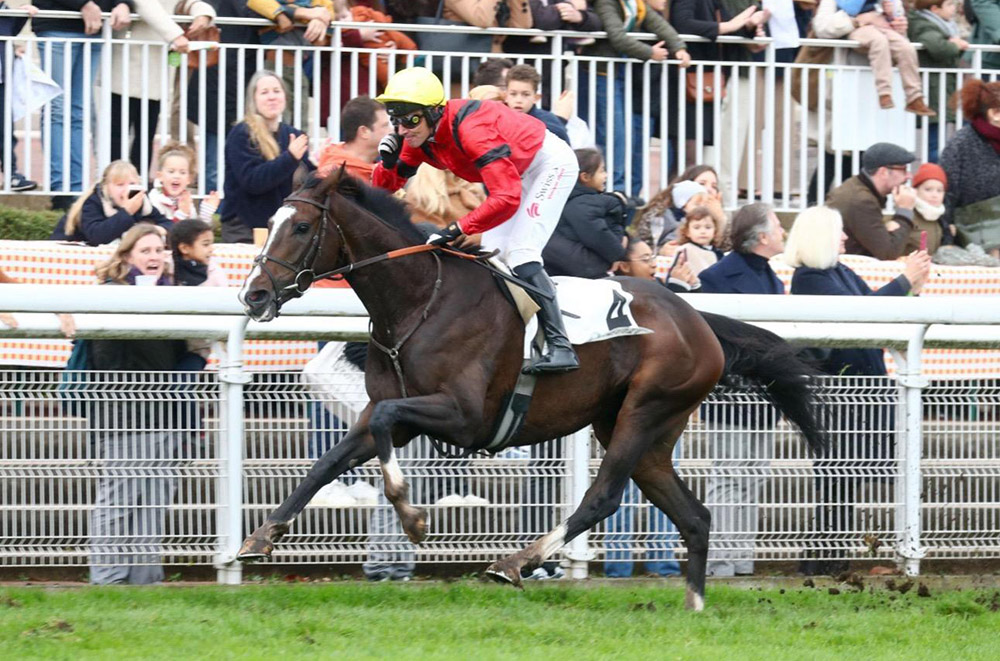
The three-year-old Léopard Du Berlais proved himself the best of his generation when winning the Grade 1 Prix Cambacères at Auteuil
Lucas continues: “Twenty twenty-five started off on the right foot with Kivala Du Berlais, and then Toscana Du Berlais showed he is one of the best chasers in the country in the Haye Jousselin. It was our first victory in this race and a win we’d been waiting a long time for! Léopard Du Berlais had already shown his early ability when he won the Prix Aguado (Grade 3 hurdle) on his debut. That’s something that doesn’t happen often. He’s an unbelievable horse, and he won very impressively that day. Then he stepped up to Grade 2 level, winning again and so of course we had the confidence to go for the Grade 1. The Cambacéres was a completely different challenge: it was run on very testing ground, and Léopard isn’t a big, strong horse, he’s very light-framed. I was sceptical about his ability to handle the ground that day but, in the end, he won magnificently.”
Léopard du Berlais hails from the most prolific Berlais foundation line that is based on Chinca. She was born in 1975 and is by a top hurdler in Orvilliers, winner of the Grande Course de Haies d’Auteuil (now a Grade 1). Orvilliers is a son of Tanerko, often described as the most influential stallion in the modern history of French National Hunt breeding. Chinca was talented on the track, winning the Listed Prix Saint-Sauveur at Auteuil, while her full brother, Chinco, won the Grand Steeple-Chase de Paris in 1979.
Chinca produced three smart performers for Jacques Menuisier (father of trainer David) and Jean-Marc Lucas later acquired two of her daughters, who established two distinct branches at the Haras du Berlais, Shinca and Chica Bonita. Shinca produced four talented horses, including Chimère Du Berlais, winner of the Grade 1 Prix Cambacérès. Her daughter by Poliglote, Cheetah Du Berlais, failed to show much ability on the track but has more than proved her worth to the Berlais broodmare band, as she is the dam of Léopard du Berlais.
“Chinca’s daughters were strong-willed in training, but not at stud,” explains Marc-Antoine, “and they produced champions like Bonito Du Berlais, who was himself very calm. Temperament is a key attribute for us. We really try to keep mares that are mentally very balanced. We’ve noticed calmer mares tend to produce calmer horses. Personally, I’m sceptical about nervous mares – I rarely keep them. They transmit their temperament. Even if the mare is a physical standout, if she consistently produces nervous offspring, your chances of breeding a top horse are slim. A horse with a relaxed temperament that listens from a foal through training becomes an athlete. True athletes are composed like Léopard, who is incredibly laid-back. Cheetah Du Berlais has always produced calm horses. It’s crucial.
The other daughter of Chinca at Haras du Berlais, Chica Bonita, was a smart three-year-old hurdler, notably winning the Listed Prix Finot in 1990. Chica Bonita is the genetrix of almost 45 black type performers over jumps, making her one of the most important broodmares in the recent history of French National Hunt breeding. She is the great grandam of Six Figures, one of the better four-year-old hurdlers of 2025 and regarded as one of France’s major hopes over fences next year, and of Bonito Du Berlais, winner of the Grade 1 Prix Cambacérès with a French rating of 78 – the highest rated three-year-old in France over jumps on record.
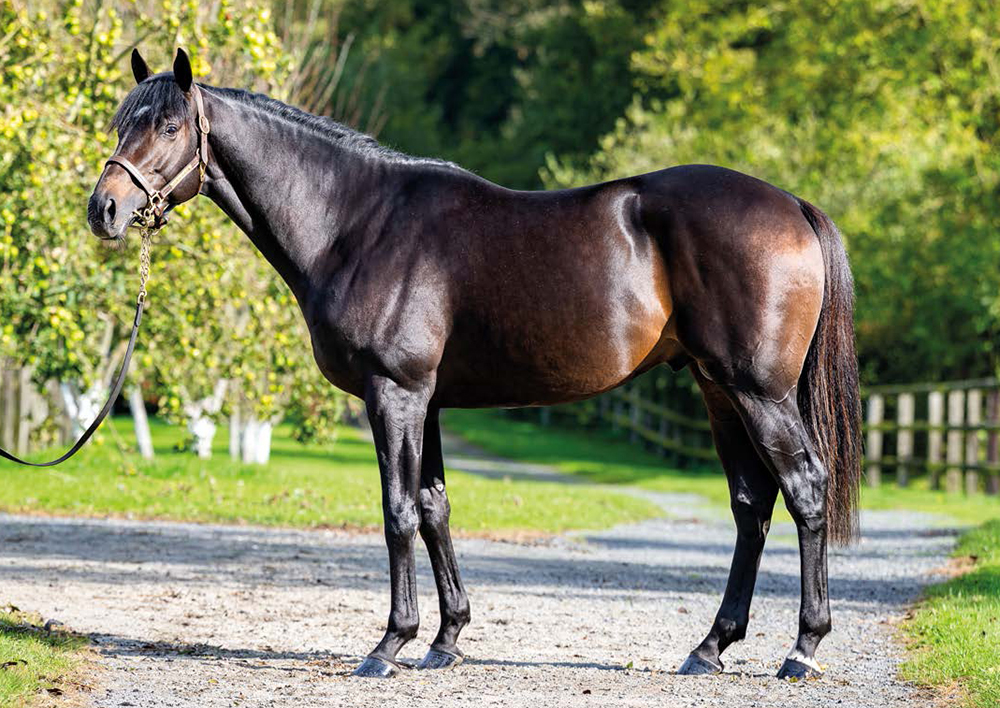
Chica Bonita’s grandson, Leon Du Berlais covered 100 mares in his first season at Haras de la Hêtraie
Chica Bonita is also the grandam of sire Léon Du Berlais, a son of Authorized who covered 100 mares in his first season at stud in 2025 at Haras de la Hêtraie in Normandy, and of the sire Clovis Du Berlais, a son of King’s Theatre who stands at Haras du Lion and has already sired around ten black-type performers over jumps. Finally, she is the third dam of another active stallion in Carlton Du Berlais, a son of Zarak, who will stand at Haras du Taillis in 2026. There are currently no less than seven active National Hunt stallions in France that carry the ‘Berlais’ suffix.
“The Chica Bonita line continues today through a number of her descendants, including Léon du Berlais,” continues Marc-Anotine. “He was another extremely laid-back horse. He was unlucky in his racing career – falls can affect jumping confidence – but his flat ability was exceptional. For me, he has one of the strongest pedigrees in the Berlais line. Physically and genetically, he’s outstanding. We have supported him strongly at stud with very good mares, and we are looking forward to his first foals.
“When we are doing the matings, we usually go to proven sires. Léopard, being by Ectot, is an exception. That was my father’s decision. We took a gamble: Cheetah was empty, so we tried Ectot, and Léopard was the result. Honestly, we never expected a horse like that. He was an ordinary-looking foal, just very laid-back. Racing constantly surprises you.
“Now, we’re at a crossroads with some established stallions retiring, so breeding decisions are becoming more complex. Still, France has a strong pool of stallions. They are quite different from those in England or Ireland. What works here isn’t always the same elsewhere. We still use stallions like Cokoriko and Doctor Dino, but we may slow down a bit with Doctor Dino because we have used him a lot.
“Our broodmares are from deep National Hunt families, so we’ve also started using flat stallions such as Galiway because he brings speed and class. We have always looked for athletic movement and jumping ability, but now speed is essential as the races are getting faster. That’s why we have used stallions like Born To Sea, or Authorized recently.
“Our goal is to breed horses that last, like Toscana, who can one day run in races like the Grand Steeple-Chase de Paris. Masked Marvel, for example, produces late-maturing horses – you don’t run them at three. You have to be patient. We’re lucky to have owners who share that long-term vision.”
Jean-Marc and Marc-Antoine Lucas also regularly purchase mares from the very best French families. They bought Kadika (Poliglote), the dam of Kivala Du Berlais (Saint Des Saints), from the “K” family at Haras des Coudraies which is unanimously regarded as one of the finest in France. She has also produced Kalif Du Berlais, winner of the Grade 1 Maghull Novices’ Chase.
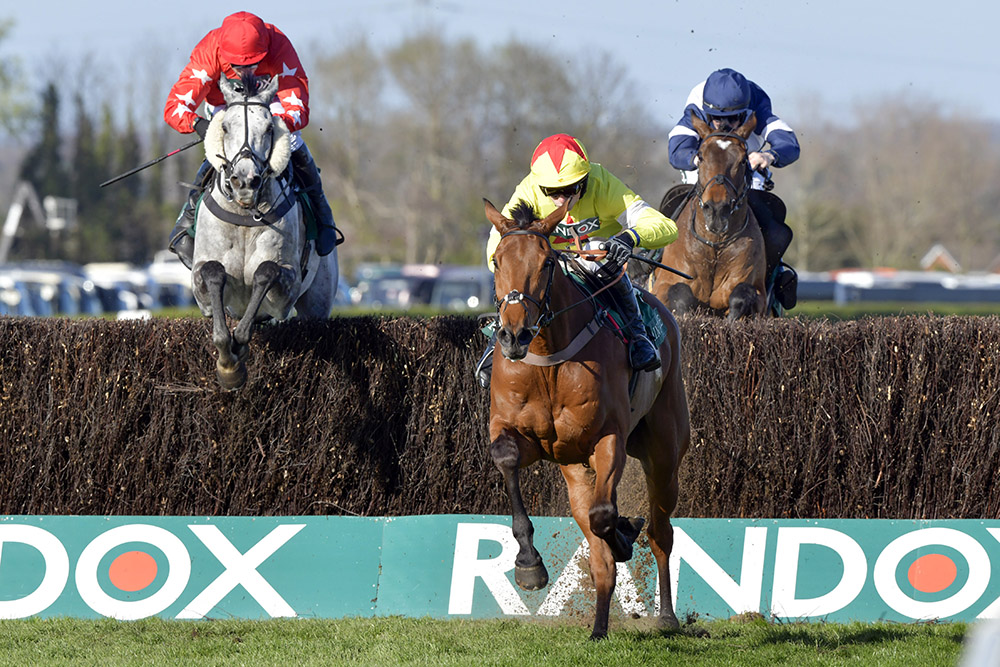
Kalif Du Berlais (by Masked Marvel out of Kadika), winner of the Grade 1 Maghull Novices’ Chase at Aintree back in April, was sadly euthanased after a fall at Kempton recently
“These results on the track confirm that we need to stay focused on quality broodmares,” acknowledges Marc-Antoine. “We try to always have very high-level stock. It’s not easy to make tough selections among broodmares. Sometimes you have to let go of a mare who hasn’t run, even though she’s the full sister to a winner – and she might be the one who produces!
“We have some very, very good broodmares, and I think we have some excellent ones to come in the future. I have a lot of faith in the young Berlais female families. We have plenty of quality in our nursery at the moment, and so now we have to hope that they can confirm this on the track.”
Marc-Antoine continues: “The Berlais ‘signature’ is to keep between 15 and 20 broodmares at most. We have ageing mares, so planning ahead is essential. Some of our broodmares will be retiring, and you have to anticipate that. The dam of Nirvana Du Berlais and Toscana Du Berlais is going to retire. So, now is the time for us to get to work. We have to protect what we’ve built.”
Katioucha (Mansonnien), the dam referred to, is the matriarch of the most successful family currently in the Lucas breeding operation. She arrived much more recently at Haras du Berlais. She comes from a family nurtured by the great Classic breeder François Dupré. Rising 23 years old, Katioucha is also the dam of the Haras de la Hêtraie sire Nirvana Du Berlais. Winner of the Grade 1 Prix Cambacérès, he was the most popular NH sire in France in 2025, covering 211 mares – a very high number by French standards. From his first crops, he has sired Leader Sport, winner of the Grade 1 Prix Maurice Gillois, and Lulamba, a dual Grade 1 winner trained by Nicky Henderson. An imposing horse with plenty of scope, he does not sire precocious types, and his stock appears particularly well suited to England and Ireland.
Katioucha also produced Graded winners Aubusson (Ballingarry) and Triana Du Berlais (Presenting), while her daughter Nice To Meet You (Martaline) has produced top hurdler and sire Nietzsche Has (Zarak) and Niko Has (Great Pretender). Another daughter, the five-year-old mare Verona Du Berlais, sold at the latest Arqana Autumn Sale for €210,000 to Guy Petit from the three-strong Berlais draft.
“We’ve reached a level where we sometimes have to sell very well-bred fillies or mares, such as Verona Du Berlais,” explains Marc-Antoine. “Unfortunately, you can’t keep everything! The selection happens more or less naturally as we race all our fillies using a leasing system. It allows people to enjoy having access to top pedigrees without the risk of outright purchase. The client leases the racing career for two years. Of course, if the filly is a champion on the track, or wins at Auteuil, or earns black type, she automatically comes back to the broodmare band.
“We select on many criteria. Sometimes we plan to sell a mare but end up keeping her because something changes. It’s never easy, but that’s breeding. Conformation is a big part of it, but we look at everything. Surprises can happen! Some small mares can produce top-class winners.”
Another decisive broodmare acquisition by Lucas was King’s Daughter. In July 2004, Jean-Marc Lucas sat down to watch racing on television and spotted a mare in the paddock running in a claiming race over 2,800m on the flat at Compiègne. What caught his eye above all was her pedigree. Her sire, King’s Theatre, had already produced Graded performers over jumps (though not yet a Grade 1 winner); her dam was Listed-placed at Auteuil, and her broodmare sire, Garde Royale, was one of the best French stallions over jumps. Jean-Marc Lucas called someone on site to put in a claim of €16,300, and duly bought the mare. Less than four months later she won the Grade 3 Prix Bournosienne at Auteuil and went on to earn nearly €370,000 with a further five victories.
At stud, King’s Daughter produced four black-type horses, including the champion Goliath Du Berlais. Now standing at Haras de la Tuilerie for Haras d’Étreham, he has the best start at stud in France in living memory. With only two crops racing, he already ranks third among French NH sires and his stud fee has risen from €7,500 to €20,000 in the space of two seasons. His full brother, David Du Berlais stands at Haras de Cercy, where he covered 155 mares in 2025.
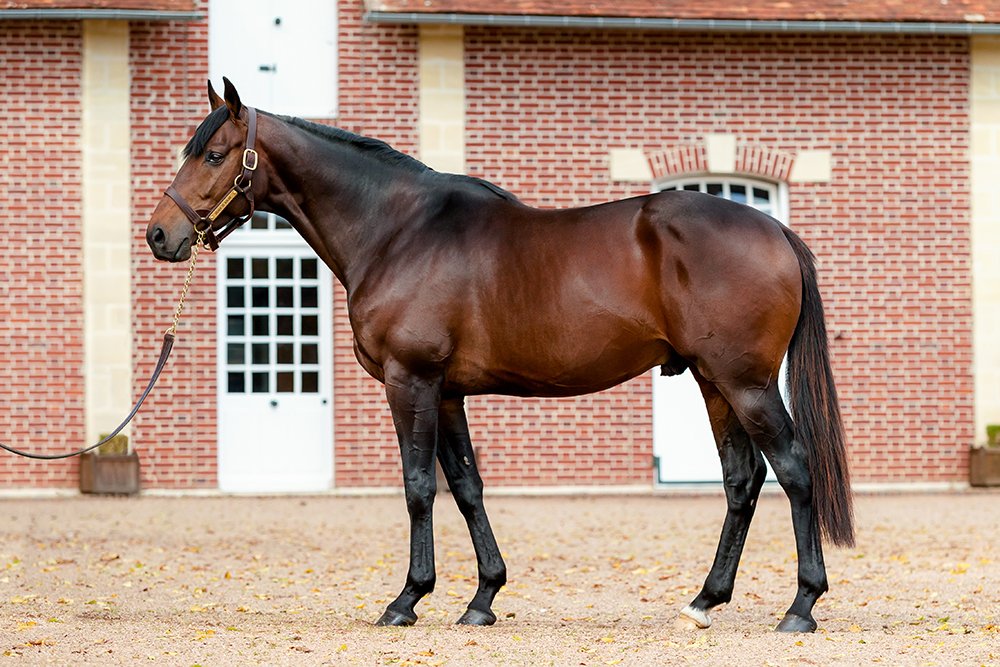
Goliath Du Berlais has had the best start at sutd in France in living memory and is currently ranked third amongst French NH sires
Another one of the seven Berlais sires in France, Castle Du Berlais, is out of the beautifully-bred Garde Royale mare Royale Athenia. Purchased by trainer Robert Collet and Jean-Marc Lucas for €300,000 at the Arqana sales – a fortune for a jumping mare in 2008 – Royale Athenia was also exceptional on the track, winning six Graded races including the Grade 1 Prix Renaud du Vivier. She has produced Sire Du Berlais, winner of the Grade 1 Stayers’ Hurdle and Grade1 Liverpool Hurdle (twice). She is also the second dam of Altesse Du Berlais, winner of the Grade 1 Prix Ferdinand Dufaure.
Berlais also runs as a commercial farm, with a large number of boarding mares, mainly Purebred Arabians, with some of the best racing Arabians in France born and raised on the stud. “We still have flat broodmares, mainly Arabians now,” says Marc-Antoine. “That’s my second passion. We’ve had major success with Arabian horses, including two Group 1 winners. It’s incredibly rewarding. The maternal line is crucial in Arabian breeding as well. The philosophy is similar: balance, strength, temperament.
“We’re very grateful to all the owners who invest and come with us on this journey,” concludes Marc-Antoine. “It has been an incredible year for our own mares, but we have to keep our feet on the ground. You could get used to winning three or four big races a year! The important thing now is to stay focused, keep the quality, and continue enjoying moments like these.
“It means a huge amount to me to keep this legacy alive within the family. It’s incredibly sad when studs disappear because there is no-one to take over, and I’m very proud to be able to continue to build upon my father’s work.”
New advertised stallions for 2026
Click on any of the new stallions below to go straight to their records
Click below to buy the 2026 book.
Why Advertise Your Stallion
Each Advertised Stallion comprises:
An Overview • Stud Record • Sales Record • Race Record • Pedigree Record