
Lizzy Sainty grew up in Kildare and Lambourn, before moving to Chantilly after graduating from the University of Birmingham with a First in Classics and a solid grounding in racing from Ian Williams, for whom she rode out each morning. She also worked several breeze up seasons for the indomitable Malcolm Bastard. After seven years as assistant trainer to John Hammond in Chantilly, she then worked with bloodstock agent Rupert Pritchard-Gordon and at the French daily Jour de Galop. She is a freelance journalist and French representative for Ballylinch Stud.
Singing the praises of Chœur du Nord
Kaid d’Authie and Heart Wood’s recent Grade 1 victories have underlined Haras de Lignières’ resident as a stallion of great potential, says Lizzy Sainty
As pedigrees go, it couldn’t be much better!
– Guillaume Lassaussaye of Haras de Lignières

Chœur du Nord’s flying start to 2026 has confirmed him as one of France’s most exciting emerging young National Hunt sires, with Kaid d’Authie, winner of the Grade 1 Ladbrokes Novice Chase at Leopardstown, his first Grade 1 winner in January. He didn’t have to wait long for a second, thanks to the runaway victory of Heart Wood in the Grade 1 Ryanair Chase at Cheltenham.
Chœur du Nord stands with Guillaume Lassaussaye at Haras de Lignières in the Orne region of Normandy. He combines the bloodlines of three sires who have profoundly shaped French jump racing: Voix du Nord, Cadoudal and Carmarthen, by the influential Devon. His sire, Voix du Nord, was one of the best National Hunt sires in France in recent decades, producing top-level horses on both sides of the Channel such as Défi du Seuil, Espoir d’Allen, Kemboy, Taquin du Seuil, Vibrato Valtat, Voix du Rêve and Vroum Vroum Mag – all from fewer than 300 foals over his eight seasons at stud. Voix du Nord currently has three sons standing in France: the most established of all, Chœur du Nord; Robin du Nord (who has covered only small books of mares) and Chanducoq, who is from the same family as Chœur du Nord, being the half-brother to Cokoriko. Recently purchased by Haras de Cercy, he also sired his first Grade 1 winner at Cheltenham last week with the Triumphe Hurdle hero, Apolon de Charnie.
Pedigree was the main motivation for Lassaussaye when he purchased Chœur du Nord from his owner/breeder Olivier Corbière, as he explains: “I wanted to get a stallion with a pure jumps pedigree and I had tried and failed to buy Cokoriko when he was available. Choeur du Nord comes from the same family and I really like this pedigree; it’s one of the best families around. He was also one of the last sons of Voix du Nord and out of a daughter of Cadoudal, who is an exceptional broodmare sire. As pedigrees go, it couldn’t be much better!”
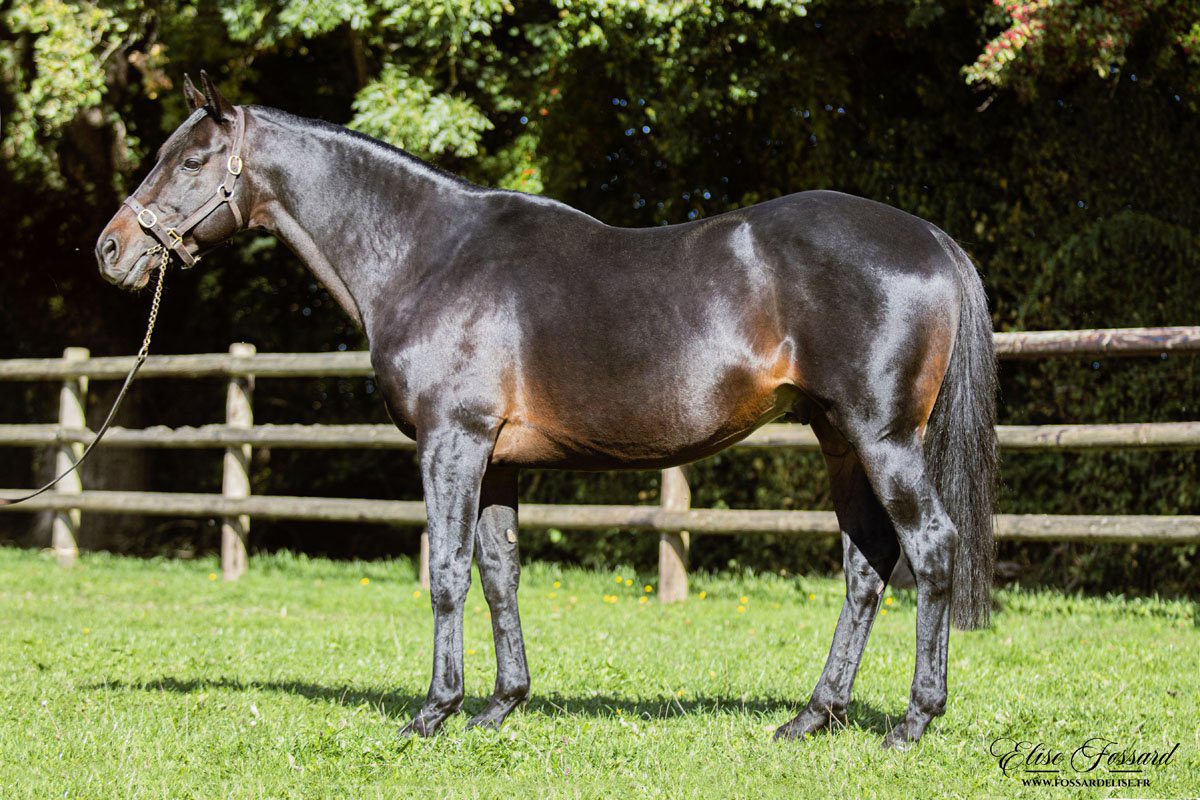
Chœur du Nord. His sire was one of the best National Hunt stallions in France and his dam is from the family of Grade 1 jumps sires Cokoriko and Chanducoq
He comes from a leading jumping maternal family: his dam, Cardoudalle, second in the Listed Prix d’Iena over hurdles at Auteuil and a winner over fences, is the dam or grandam of ten black type performers over jumps, including the leading French sire Cokoriko and the champion mare Benie des Dieux. This old French family has produced many high class National Hunt horses over the decades, including the champion Losange Bleu.
He is also an outcross to a number of the prominent bloodlines in jump racing, as Lassaussaye elaborates: “He’s very, very easy to cross. You can bring any mare to him, as long as they have a bit of size. He even crosses well with daughters of Saint des Saints, so inbreeding to Cadoudal. He passes on his fantastic temperament, so he’s a very good choice for mares that are a bit complicated mentally, and that counts for a lot when it comes to breeding a racehorse. He works well with the Montjeu line, and with daughters of Martaline, who can be a bit hot.
“I tend to look for mares from the Garde Royale line, which is the classic cross with Cadoudal. It’s an exceptional mating. I’ve bought a few mares recently by Castle du Berlais. He’s a son of Saint des Saints, but he produces more Garde Royale types. I think this should be a good fit for Choeur du Nord. Another perfect cross for him is the Mill Reef line, which I think is one of the best. It’s another exceptional mating. However, I can’t deny that he really does cross with anything, as long as they have the right conformation. You can also bring him chesnut mares as he only produces bay foals!
“He also passes on his quality. He really stamps his offspring. He tends to produce racehorses that are straightforward, correct, well-built, and medium sized. I’m not sure if they’re truly the typical Anglo-Saxon type, but they are racy and well balanced. I don’t think that they are overly precocious, but they’re very easy horses to train so they tend to get to the races early. They definitely improve with age.”
Chœur du Nord is a prime example of the traditional French jumps stallion in both pedigree and performance. The primary selection criterion for such stallions is that they carry a jumping pedigree. Whether a horse has raced on the flat or over jumps is not an issue for French breeders. This philosophy has led to some of the most influential horses at stud in recent times: Saint des Saints, who was kept entire to preserve a son of Cadoudal, arguably the most influential jump stallion in French breeding history; Balko, a son of top sire Pistolet Bleu; Kapgarde, a son of Garde Royale and Dom Alco, a son of Dom Pasquini. Even Doctor Dino, a flat horse, attracted French breeders as his sire Muhtathir was one of the best jump sires of his generation.
Lassaussaye says: “I took the risk of buying Chœur du Nord after his third race. he had been stopped for a break and the stud was considering gelding him. With genetics of that quality, it would have been a shame not to take the chance, although it was risky after just three races, but here we are. There is plenty of luck involved too, because what he has become is something truly exceptional.”
The French jump programme contains relatively few black type races proportional to the total number of races, and so certain maiden races are very highly regarded. This is the case with the Prix Rush, which comes very early – in March of the three-year-old season – and which has been won by some very good horses in recent years, including Grade 1 winners Terrefort, Losange Bleu, Monmiral, Pic d’Orhy, Master Dino and Esmondo. Chœur du Nord won the Prix Rush on his debut, then followed up with victory in the Prix Champaubert, also over hurdles at Auteuil. His career ended after his third appearance with a second place in the Listed Prix Go Ahead.
“I really value horses that can win, or even run well at three in the spring,” explains Lassaussaye, “as they have been able to withstand the intense work over the winter from two to three. They have to be sound, physically and mentally, to do this, and Chœur du Nord is both of these things. He was trained by Guillaume Macaire, and so also withstood a track and a training regime that is very selective.”
While it would be difficult in other countries to retire a horse that had only raced as a three-year-old with just a Listed placing, in France breeders are more inclined to take that chance. The French Breeders’ Premiums mean that breeders don’t have to follow the purely commercial route – they can recoup their costs on the track rather than the sales ring, giving France a greater diversity of jumps stallions and bloodlines.
“Jump racing is demanding by its nature,” observes the stallion owner. “It selects for stamina and the ability to handle tough training. Running 3,000 meters at Auteuil on heavy ground is a far cry from running at two or three over 2,400m on the flat. If they are capable of performing at Auteuil at three, then they have the right qualities. Goliath du Berlais is a perfect example. He didn’t win in his spring three-year-old season, but he kept finishing in the money and went on to win in the autumn.”
Chœur du Nord’s first crop, born in 2017 and conceived at a covering fee of €1,500, numbered 49 foals. From the outset, some leading French breeders supported him, as well as the Lassaussaye family, who were the breeders of almost a quarter of this first crop. In 2020, the stallion had eight runners from his first crop of three-year-olds, with two winners including Baladin de Mesc, a winner on his debut in May before going on to win a Listed race at Auteuil and finish third in the Grade 1 Prix Cambacérès in the autumn. Chœur du Nord has since covered over 110 mares each season, limited to a maximum of 130, with his covering fee regularly increasing to reach €8,500 in 2026. Since then, he has consistently produced a winner/runner ratio of between 30 to 38 per cent, and closed 2024 fifth in the general French leading sires table by prize money. In 2025, he finished as fourth leading young National Hunt sire (retired to stud in the last ten years) behind his leading cousin Cokoriko, yet with half the number of runners.
“We should see more and more good horses by him in the next couple of years,” notes Lassaussaye, “as the standard of mare he has covered has been improving each year. I limit him to 130 for two reasons. One, most importantly, I want to preserve him, as I truly believe he is one of the best stallions around. I want him to still be covering mares when he’s thirty, like Turgeon. One hundred and thirty mares is already a significant number. It’s a lot of work.
“He receives a good number of mares from abroad now too. I would say that he is now a confirmed stallion, and Irish and British breeders recognise that, so he receives some very nice mares to cover. We had good mares initially, but not from the top-tier, so we should have a virtuous cycle and see some really good horses in the future. We have covered several Graded mares already this year, and it is a real honour to have mares of that quality visiting him.”
To date, Chœur du Nord has produced 25 black type performers from 196 runners, and is now a sire of two Grade 1 winners with Kaid d’Authie and Heart Wood. His best progeny also include Jeriko du Reponet, winner of the Grade 2 Rossington Main Novices’ Hurdle, and Royal Saga, winner of the Grade 3 Prix La Périchole and third in the Grade 1 Prix Maurice Gillois at Auteuil.
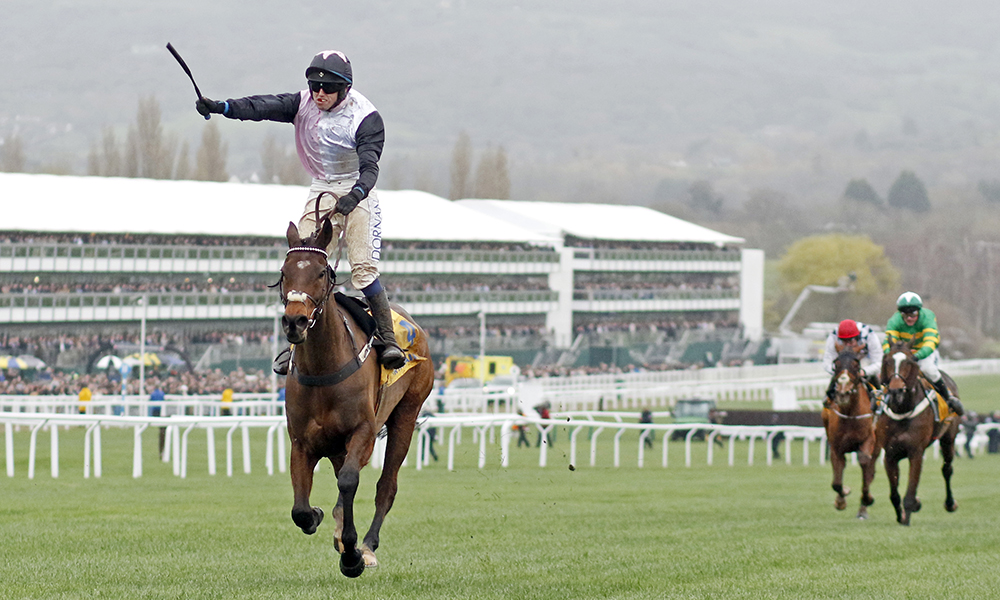
Heart Wood becomes Choeur du Nord’s second Grade 1 winner this year with an impressive success in the Ryanair Chase at the Cheltenham Festival
“He has some good horses around at the moment, in particular Callisto du Nord, trained by Philippe and Camille Peltier, who has caused a stir all winter,” says Lassaussaye. “He looks something special. He has a lot of very nice three- and four-year-olds in training too, all over France, and in England and Ireland too. He’s already had a lot of good black type horses at Auteuil.
“I have never received negative feedback from a trainer on his progeny: they are easy to train as they are so good in their mind. That’s the key, because when you have the right mindset, your career path is completely different. So, it simplifies things for the trainers in terms of preparation and for their programme.”
With the quality of mares visiting him continuing to rise and two Grade 1 winners already on his record, the trajectory is looking sky high for Lassaussaye and Chœur du Nord, and the breeder is enjoying every moment: “I’m just as enthusiastic as I was on day one, I think, or even more! He is a top sire in the making, and truly improves his stock. Lots of young French stallions have been propelled to success with tons of black-type mares in their first books, but he’s done it the hard way. As soon as you send him mares of a slightly higher quality, you’re almost guaranteed to produce a good horse.”
On the evidence so far, Chœur du Nord looks well equipped to deliver on that promise.
New advertised stallions for 2026
Click on any of the new stallions below to go straight to their records

Click below to buy the 2026 book.
Why Advertise Your Stallion
Each Advertised Stallion comprises:
An Overview • Stud Record • Sales Record • Race Record • Pedigree Record